What we believe
Moving people into high-productivity jobs is the only durable way to dramatically raise quality of life for Africans in poverty.
Why welfare in Africa matters
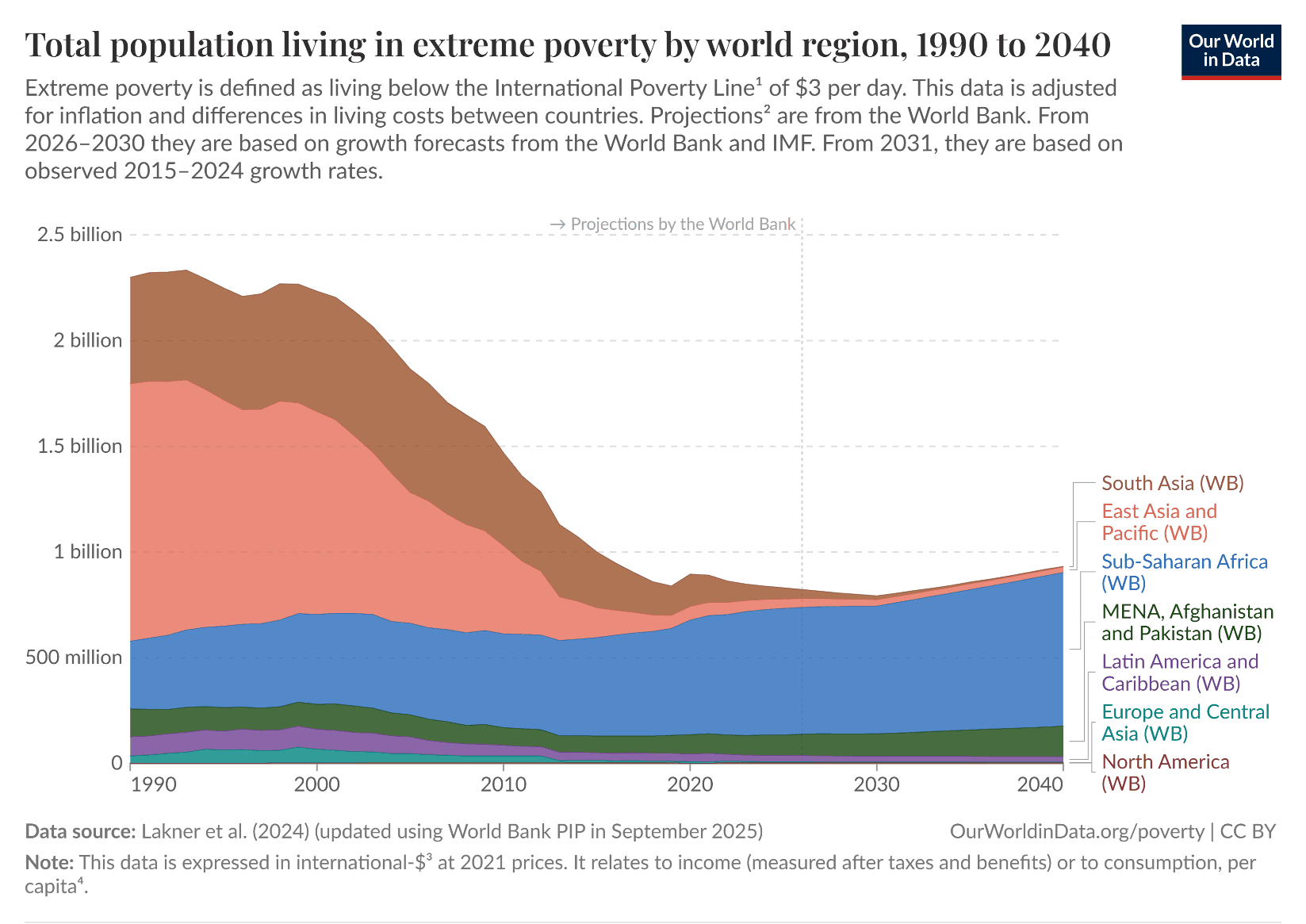
Africa has by far the most people living in poverty of any continent.
- By 2040, around 24% of the world's population will live in Africa.
- By 2040, nearly 80% of people in extreme poverty globally will be in Africa.
- Most of these people will lack access to basic sanitation, proper healthcare, and quality education.
Why income is the key
Raising incomes is the only durable way to improve quality of life for the world's poor.
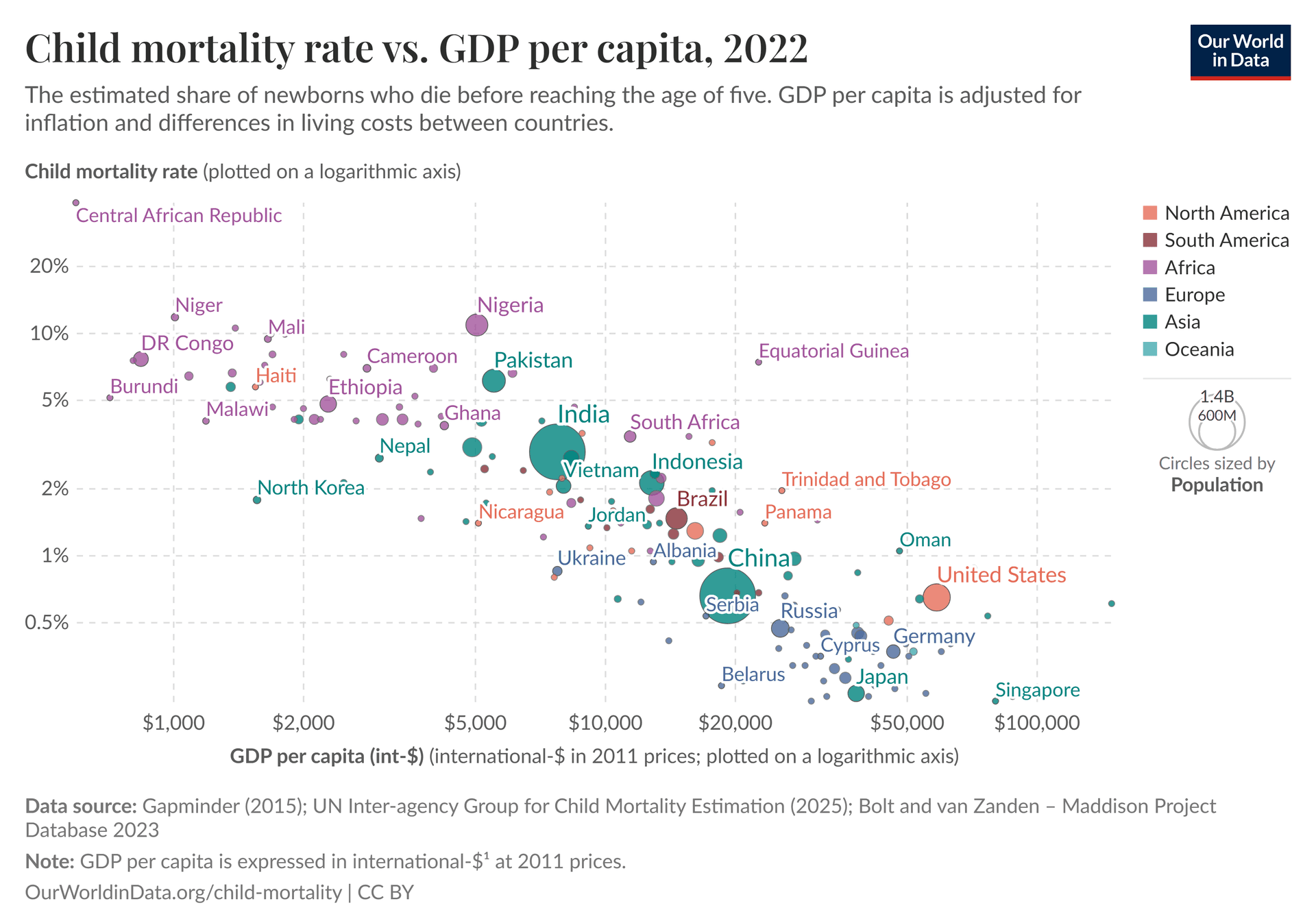
- Across countries, higher income per person accounts for almost all of the difference in child mortality, life expectancy, education, self-reported happiness, and nearly every other metric that matters for human welfare.
- For example, no country with an income per person below $7,000 has managed to reduce child mortality below 1%.
- Healthcare, education, and other services cost money. People earn more from higher-productivity work, and governments collect more revenue by taxing those higher incomes.
Two proven pathways to higher incomes
The only durable way to increase incomes is by creating higher-productivity jobs. We have identified two sectors that are the highest leverage opportunities to create these jobs and dramatically increase incomes.
Export manufacturing
- Jobs in value-added manufacturing provide steady, high-productivity employment for many workers.
- Exporting provides access to a huge global market, brings in foreign currency, and forces businesses to compete internationally. It has also been the path to prosperity for most high-income countries.
- The first companies to enter a new export market face high setup costs: training workers, building supply chains, and finding buyers. The fund helps pioneer businesses overcome these barriers.
- Export manufacturing jobs can increase a worker's productivity 5x compared to subsistence farming. These businesses employ thousands of workers, spread skills across the local economy, and support large local supply chains.
Case Study
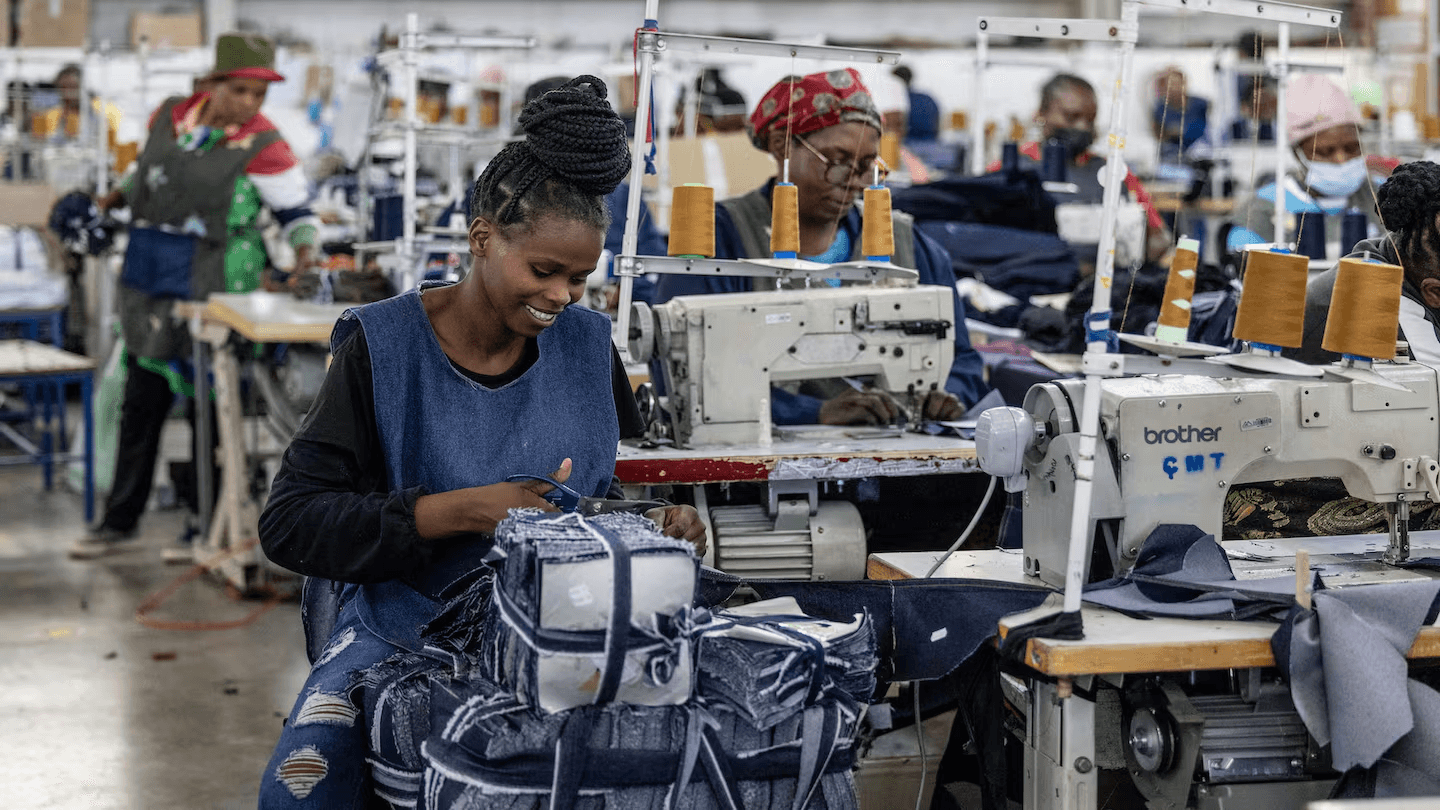
Tooku Garments
Tooku Garments in Tanzania makes jeans and other clothing items for global brands such as Levi's. They employ 10,000 people in steady, well-paying, high-productivity jobs.
They also support upstream suppliers, train workers and bring foreign currency into the economy.
International labour mobility
- Moving from a low-income country to a high-income country can dramatically improve a worker's life prospects.
- Many of the world's rich countries have aging populations and worker shortages, while Africa has the world's fastest-growing population and a severe shortage of good jobs.
- Workers from Africa face difficulties finding opportunities, accessing financing, and learning languages. The fund backs organisations tackling these challenges.
- A typical African worker might earn ~$2k per year at home, compared to ~$50k per year in a high-income country, and is also likely to send thousands of dollars back home to their family.
Case Study
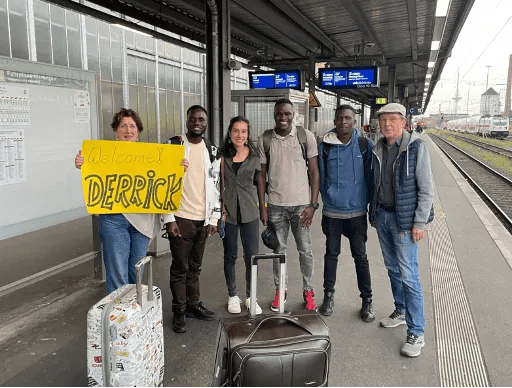
Malengo
Malengo provides student financing for hundreds of East Africans from low-income or refugee backgrounds to move to Germany for study or vocational training, leading to high-productivity employment opportunities.
A Ugandan graduate who moves to Germany increases their lifetime earnings from ~$200k to ~$2m, a 10x increase.
Want to build against this thesis?
We back world-class founders and operators to build high-impact companies in export manufacturing and international labour mobility.
Build with us →